
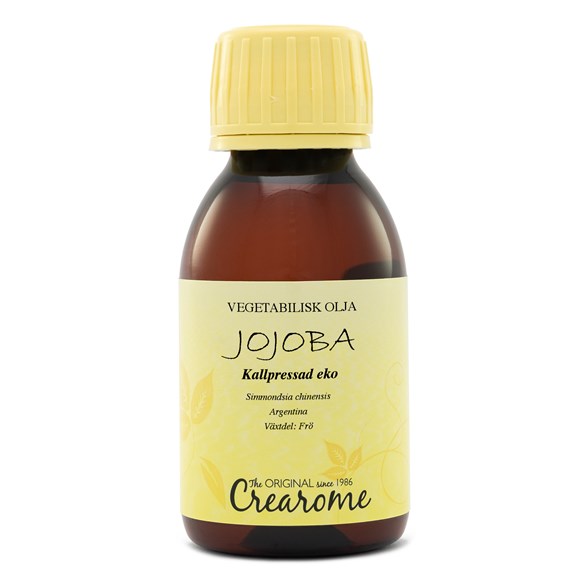
Jojoba oil Organic cold-pressed 100 ml
Jojoba oil leaves the skin soft and velvety, helps retain moisture, and suits all skin types.
Ideal for both dry, flaky skin and oily skin, as it helps regulate sebum production naturally.
Description
Article no.: 90011724
Jojoba oil is a mild, versatile oil known for its balancing and moisturizing properties. It is rich in monounsaturated fatty acids and has a unique composition that closely resembles the skin’s own sebum. This makes it excellent for both dry and oily skin. It helps lock in moisture, soothes irritation, and supports the skin’s natural barrier.
Due to its stability and natural UV protection, jojoba oil is also suitable for use in sun care products. It may help soothe skin conditions such as acne, eczema, psoriasis, and cracked or irritated areas.
It can also be used as a nourishing hair treatment—especially for dry, lifeless hair or scalp conditions like dandruff and seborrhea.
Oil Type: Semi-fat
Fatty Acid Composition: Saturated fats 5%, monounsaturated fats 95%
Botanical Information:
The jojoba plant (Simmondsia chinensis) is a hardy, evergreen shrub or small tree that grows 1–3 meters tall. It thrives in desert regions of North America—especially in Southern California, Texas, Arizona, and Mexico—thanks to its deep root system. The tree begins producing seeds after about five years and can live for 50–200 years, yielding 1–6 kg of seeds annually. Its resilience to heat and drought is exceptional, though it is not frost-tolerant.
The seeds contain around 50% liquid wax, traditionally used by Indigenous peoples for both skincare and nutrition.
Detailed Fatty Acid Breakdown:
-
Palmitic Acid (C16:0) – 3%
-
Palmitoleic Acid (C16:1) – 1%
-
Oleic Acid (C18:1) – 5–15%
-
Gadoleic Acid (C20:1) – 66–80%
-
Erucic Acid (C22:1) – 10–20%
-
Other fatty acids – 6%
Melting point: approx. 5°C
Botanical name: Simmondsia chinensis Seed Oil
Plant part used: Seed
Country of origin: Israel
Note: Some fatty acids may partially or fully solidify at low temperatures (e.g., during cold storage or winter transport). To liquefy, simply place the bottle in a warm water bath or near a radiator. This does not affect the oil’s quality or effectiveness.